What Is a Deviated Nasal Septum?
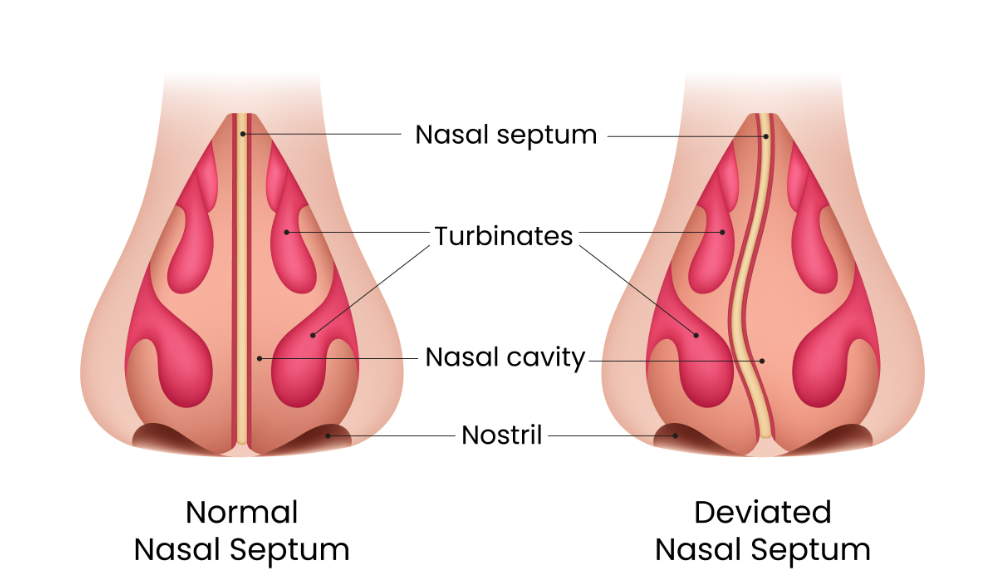
The nasal septum is the thin wall that divides your nose into two sides. Sometimes, this wall is not straight. Instead, it bends to one side. This is called a deviated nasal septum. Because of this bend, one side of your nose may feel blocked. As a result, you might have trouble breathing through your nose. Many people have a slightly bent septum. However, if the bend is severe, it can cause problems.
Common Symptoms and Signs
A deviated nasal septum can cause many symptoms. Some people notice them right away. Others may not realize the cause until a doctor checks their nose. Common signs include:
Sometimes, symptoms get worse when you have a cold or allergies. In addition, dry air can make nosebleeds more common.
Causes and Risk Factors
There are several reasons why someone may have a deviated nasal septum. For example, some people are born with it. Others develop it after an injury. Common causes and risk factors include:
In some cases, family history may play a role. However, not everyone with a deviated septum will have symptoms.
How Doctors Diagnose a Deviated Septum
Doctors use a simple exam to check for a deviated nasal septum. First, they ask about your symptoms. Next, they look inside your nose with a light. Sometimes, they use a small camera called an endoscope. This helps them see the shape of your septum. If needed, your doctor may order imaging tests, such as a CT scan. However, most cases are diagnosed with a physical exam alone. According to the CDC, early diagnosis helps prevent long-term problems.
When Surgery (Septoplasty) Is Needed
Many people with a deviated nasal septum do not need treatment. However, if you have blocked breathing or frequent infections, your doctor may suggest surgery. This surgery is called septoplasty. It is needed when:
In some cases, septoplasty is done along with other nasal surgery to improve breathing.
Septoplasty Procedure: What to Expect
Septoplasty is a common nasal surgery. During the procedure, the doctor straightens the septum. Usually, you receive local or general anesthesia, so you do not feel pain. The surgeon works inside your nose, so there are no visible scars. Most surgeries take about one hour. After surgery, you may go home the same day. However, your doctor will give you instructions for care.
Recovery and Aftercare Tips
After septoplasty, recovery is usually quick. Most people feel better within a week. To help healing, follow these tips:
Although mild swelling and stuffiness are common, these usually go away soon. If you have heavy bleeding or pain, contact your doctor right away.
Prevention and Lifestyle Advice
While you cannot always prevent a deviated nasal septum, you can lower your risk of injury. For example, wear a helmet during sports. Also, use seat belts in cars. If you have allergies, manage them to reduce nasal swelling. In addition, avoid picking your nose, as this can cause injury. Finally, see a doctor if you notice blocked breathing or frequent nosebleeds.
Conclusion
A deviated nasal septum can cause blocked breathing and other problems. However, treatment options like septoplasty can help. If you have symptoms, do not wait. Consult an ENT specialist Dr. Hareesh for personalized advice on deviated nasal septum and treatment options.